Antique Paints Blog
Complete Guide to Sanding Sealer for Wood Finishing & Surface Preparation
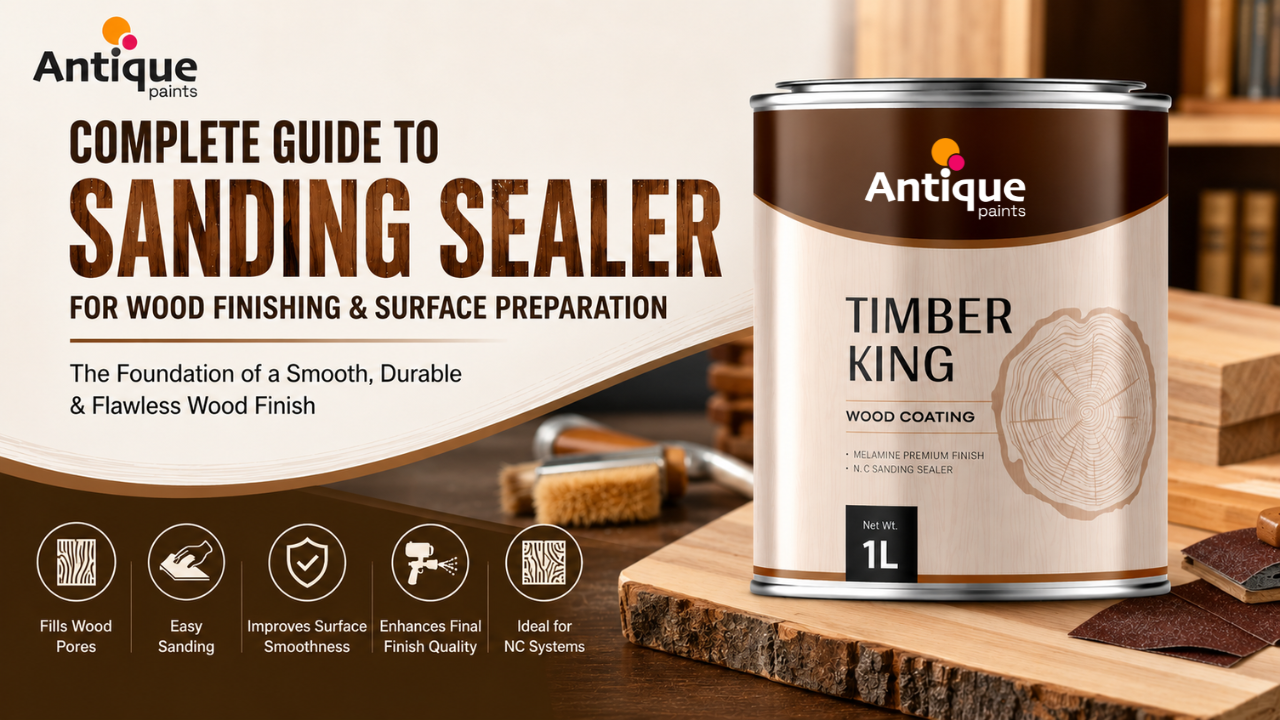
If you’re involved in furniture manufacturing and wood finishing then you realize that the final appearance is heavily influenced by the surface that has been prepared. One of the primary substances utilized in professional wood coating systems is sanding sealer. It’s the foundation layer that decides on how smooth and glossy the final product will appear.
In this article we will learn the basics of sanding sealer, including NC sanding sealer for wood, sanding sealer price factors, application methods and how it can improve furniture surface preparation and overall finishing quality.
What is a Sanding Sealer?
Sanding Sealer is a special base coating applied to wood prior to applying the final polish, paint or lacquer. Its primary purpose is to seal the wood pores, reduce surface roughness and help in sanding.
It is used extensively in:
- Furniture manufacturing industries
- Interior wood finishing
- Doors and window frames
- Decorative wooden products
In modern wood coating systems, sanding sealer is regarded as an essential element to achieve high-end finishing.
Why Sanding Sealer is Important in Wood Finishing
Raw wood has natural pores and uneven textures. If the wood is not properly sealed, polished or painted, it gets absorbed unevenly, resulting in poor results when finishing.
Key Benefits of Sanding Sealer:
- Improves Surface Smoothness
It fills wood pores and forms a solid base for further coatings. - Enhances Furniture Surface Preparation
It plays an important role in the surface preparation for furniture and ensures that the wood is ready for priming and top coating. - Better Sanding Efficiency
The layer is easy to sand, allowing you to create a smooth and perfect surface. - Improves Final Finish Quality
It is directly responsible for the quality of furniture finishing by ensuring uniform coating application. - Reduces Paint Consumption
Because wood absorbs less paint, it reduces material usage and cost.
NC Sanding Sealer for Wood
One of the most widely used types is NC sanding sealer for wood (Nitrocellulose-based).
Features of NC Sanding Sealer:
- Fast drying formula
- Smooth sanding properties
- Compatible with NC lacquer systems
- Widely used in furniture factories
- Ideal for mass production
NC Sanding Sealer is an essential component of the industrial wood coating solutions, specifically in modular furniture and commercial woodwork.
Using Sanding Sealer: Application Process
A proper application is crucial to achieve professional outcomes.
Step-by-Step Process:
Step 1: Surface Cleaning
Clean dust, oil, and any previous coatings off the wood’s surface.
Step 2: First Coat Application
Apply an even, thin coat of sanding sealer with spray or a brush.
Step 3: Drying
Set the proper drying time based on the type of product (NC sanding sealer dries quickly).
Step 4: Sanding
Use fine sandpaper for smoothing the finish after it has dried.
Step 5: Second Coat (Optional)
For high-end furniture, another coat could be applied to ensure better sealing.
Step 6: Final Sanding
Make sure the surface is prepared for primer or final finishing coat.
Sanding Sealer Price Factors
The sanding sealer price in India varies depending on multiple factors:
1. Type of Sealer
- NC sanding sealer (most common, affordable)
- Polyester sealer (premium and high build)
- Water-based sealer (eco-friendly and slightly more expensive)
2. Brand Quality
Well-known industrial brands may cost more, but they have greater reliability.
3. Packaging Size
Bulk packaging can reduce the costs per Liter.
4. Industrial vs Retail Supply
The cost of industrial supply is less than retail prices.
Overall, NC Sanding Sealer is the most affordable alternative for furniture manufacturers.
Using Sanding Sealer in Furniture Manufacturing
The most frequent question asked by users is: how to use sanding sealer for wood?
It’s simple, but it has to be done correctly.
Best Practice:
- Always apply thin coats
- Do not overload the surface
- Sand properly between coats
- Maintain proper drying time
The correct use of wood will result in better wood coating systems performance and more durable finishes.
Role in NC Paints Base Coating System
In NC paints base coating, sanding sealer acts as the foundation layer.
It helps:
- Improve adhesion to NC base coats
- Reduce surface defects
- Improve smoothness and gloss
- Ensure uniform finishing
Without sanding sealer, NC paint systems can exhibit uneven absorption and dull finishes.
Sanding Sealer in Industrial Wood Coating Solutions
In the modern coating industry, leading paint manufacturers follow advanced systems for durability and finish quality. You can explore some of the top paint companies in India that use such technologies in industrial applications.
Benefits in Industry:
- Faster production cycles
- Rework time is reduced
- Uniform finishing across batches
- Better efficiency in spray systems
It is extensively used in furniture factories, office furniture production, and wooden panel industries.
Common Mistakes to Avoid
1. Applying Thick Coats
Leads to cracking and uneven sanding.
2. Skipping Sanding
This results in a rough surface and poor finishing.
3. Incorrect Drying Time
It affects adhesion and topcoat performance.
4. Using Wrong Product Combination
Always make sure to match your coating process (NC, PU, etc. ).
Sanding Sealer vs Wood Primer Coatings
Feature | Sanding Sealer | Wood Primer Coatings |
Purpose | Smooth surface & sealing | Adhesion & protection |
Sanding | Easy sanding | Limited sanding |
Stage | Before base coat | Before top paint |
Function | Surface preparation | Paint bonding |
Both are essential, but the Sanding sealer is more focused on smoothness and finishing quality.
Conclusion
Sanding sealer is not just a base coating, but it is the foundation of professional wood finishing. If you’re using NC sanding sealer for wood or working with advanced wood coating systems, it ensures smooth surfaces, greater adhesion and top-quality outcomes.
From furniture surface preparation to industrial wood coating solutions, Sanding sealer plays a crucial role in achieving attractive and durable finishes.
For professionals and Paint manufacturers, using the right sanding sealer is not an option, it is essential for ensuring consistent, top-quality output.
FAQs
1. What is sanding sealer used for?
Sanding sealer is used to seal wood pores, smooth the surface, and prepare wood for painting or polishing in furniture finishing.
2. What is NC sanding sealer for wood?
NC sanding sealer is a nitrocellulose-based fast-drying sealer used in furniture manufacturing to create a smooth base for NC paint and lacquer systems.
3. How do you use sanding sealer on wood?
Apply a thin coat of sanding sealer on cleaned wood, let it dry, sand the surface smoothly, and then apply additional coats or top finish if needed.
4. What is the price of sanding sealer in India?
The sanding sealer price in India depends on type, brand, and quantity. NC sanding sealer is usually the most affordable option for industrial use.
5. Can we use sanding sealer before paint?
Yes, sanding sealer is always used before paint or polish to improve adhesion, smoothness, and final finish quality.
6. Is sanding sealer necessary for furniture finishing?
Yes, it is highly recommended because it improves surface preparation, reduces defects, and enhances overall furniture finishing quality.